Sunday, 12 April 2015

Hate Syndrome

Sadly, these days, I see more and more people I know fall victim to what I refer to as:
 Hate Syndrome.

Seemingly nice people that I once would have happily sat and had a coffee with, are now the ones I avoid.  Especially on social media.

For one main reason: their hate campaigns.


I honestly don't care what your beliefs are, your background, your political stance, your choice of lifestyle, your anything - they are your choices. No matter what they are, you live in a world full of others and you need to learn to get along! I might not agree with you, I rarely do as a matter of fact, but I don't act like a bully. I don't belittle you or call you names, but I see you doing it and it makes me angry. Whatever your message is, it makes me instantly opposed to your point of view.  So your campaign is not working. Not at all.  


In the past few weeks alone, two main topics have dominated my social media news feeds.  Vaccinations and Islam. 

Here's the deal: If you are on team PRO-VAX, great, have that stance. If you choose to call ANTI-VAXXERS stupid, idiots, and much worse, if you post links making fun of them and you lump them all in the category of extremist uninformed hippies, then all it does is paint yourself in a bad light. Have your view and share your information - but cut the mob mentality and nastiness. You end up sounding and acting worse than what your are accusing others of.

If you want to post religious and racial hate, then you'd better hope you are a perfect human. EVERY SINGLE religion has extremists. Christians included. They have all committed horrible crimes through history.  But you would hate to be judged by what they do or have done. If you want to eliminate one religion then eliminate them all. There are lovely and amazing people in this world from ALL races and religions and they are your neighbours all across the globe. Hating someone, hating a group of people does nothing positive for you, it changes you and NOT for the better. 


In the western world, we have something that YOU value, that YOU are proud of and one reason you love living here. That is the freedom to choose. Choose your own religion, which political party to vote for, which method of education your want for your children, which Dr they see, all your choices to make. You feel it is your right, and it is. Until you decide that everyone should think like you. Then you think it's ok to take away their right to choose. Or ok to blackmail them into choosing your path. Or ok to treat someone badly because you aren't saying these things to their face.


Your hate campaigns are doing only ONE thing. Making everyone dislike you. You are not winning them over, you are driving them away. You are not high on my list of people I will call to catch up with, I won't read your social media posts, I skip articles I know you've commented on. 

I don't need your Hate campaign in my life. 


I don't hate you though, but I do hope you change. Back into the caring person I thought you were. 


Wednesday, 8 April 2015

Your Brain is a Pizza - Explaining Aspergers to my 6 year old.

How do you explain to your then 6 year old, what Aspergers is, what it means for him and why he is different to other children - all while being very positive about it all and keeping it simple enough for a young child? 

For us, it was relating it to something tangible, something that he loved, something that was fun. Something simple. So we went with Pizza. *It will make sense I promise*

I started with "Your Brain is a Pizza".  Everyone's brain is a pizza. 


When you order a pizza and you open the box, you will either get a Pizza that has been sliced evenly, or one that is a mixture of bigger slices and smaller slices.  Most times, you get an evenly sliced one. Lets call that a regular brain. It's what most people have. It's all even and everything divided up as it should be.  I told my son that he and I have the random, uneven, mixed up pizza brain.  It's an Aspergers brain.  It's not wrong, just different.

So how does having a differently sliced pizza brain explain Aspergers? 


Well I then explained: Imagine that all the functions a brain is supposed to do, is in sections and each slice represents each section of the brain. One for Intelligence, one for being good at sports, one for making friends and being social, one for our senses, one for emotions etc. Everything you are supposed to have, learn and be able to do for each of those areas, is on a well proportioned slice. There is room for each element. All the toppings are evenly spaced. It means they can do all of these functions easily. One is not overtaking another. 


So imagine if all those same functions have to be spread on an uneven pizza. For Aspergers brains, the LARGE slices get things like Intelligence, Senses, Emotions.  The small slices get being social/making friends, being coordinated/good at sports, etc.  What does that mean?  It means that on the big slices, we have lots more of those things. Imagine LOTS of toppings, overlapping each other or spread far apart as the slices are so big. We can have a lot of intelligence and can mean our brain works overtime ALL the time, constantly thinking as there is SO much room to fill up! It means we have super emotions, lots of them, often many at a time and they can be hard to control, they are so powerful and they have lots of room to run around and get even more emotional.  It means our senses can be huge too. Too sensitive or not sensitive enough (as there is too much room for it to spread out and chill out).  On the small slices it can mean there is not enough room to fit all the elements we need. So we find it hard to make friends, hard to ride a bike or even hold a pencil. We couldn't fit all the information we needed onto those small slices. All that topping is over on the big slices and sitting in the intelligence slice.

That might sound bad, it will sound hard, it might even sound not fair. 

BUT! 

All it means is that we think differently. When we think, it's using the larger intelligence part of our brain to learn how to grow the smaller parts and use them better.  We still have the same sized pizza after all. We just have to learn how to use it the best way we can. The intelligence slice has to take control a little, be the leader and help train the smaller slices. He can use his intelligence to learn what to do and how to do it. 


Most people think a regular pizza is the best. Maybe it is. For some.  But I like uneven pizza's. The giant slices are awesome!  They have lots more topping and are like a bonus.  The small slices are good too, they don't make you feel as full.  It's all about how you look at it. 

My son LOVED this analogy.  He got it straight away.  All the things he found hard to do, he knew were on small slices, all the things he found hard to control and had lots of, were on big slices. But what he took from all of it, was that he had a super slice for intelligence. It made everything ok for him. He saw it as a very cool way to be. That in the long run, he'd learn everything he needed for the small slices so he wasn't going to miss out.

We love our Pizza Brains LOL 


And for months he proceeded to tell anyone who would listen, that he had a Super Aspergers Brain - with a super smart pizza slice! 


Sunday, 5 April 2015

Happy Easter!

Happy Easter to everyone! 

"EB" aka the Easter Bunny came to visit us last night.  Warrior Kid sat up late writing him a note to warn him the pets were inside and to be careful LOL 


Sure enough EB was safe and managed to leave a big stash of chocolaty goodness for Warrior Kid which will keep him going for a long time.  He is not a sweet tooth and in past years, a small Easter Egg stash has lasted him till the next Easter.  Last week I threw away a few little ones from last year LOL.  He also likes to save things.  Ah the life of an OCD ASD child hey! 


Next was Breakfast.  It is tradition in our house to have Soft Boiled Eggs with toast 'soldiers'.  So of course this year was no different. We used some massive free range eggs that barely sat in the egg cups LOL.  I got to use my beautiful Royal Albert egg cups and the boys got to use their character ones. 


Then once everyone was fed, it was time to go outside for the Easter Egg hunt. Of course it means having to take the dogs outside, as according to Warrior Kid, they are hunters and can sniff out any that he misses in the garden. Especially seeing as the grass is super long from all the rain we have had! 


So now it is a day of movies, cooking, family board games and chocolate! 
Enjoy and Happy Easter xoxo 

Saturday, 4 April 2015

Weekly Wrap-Up : Birthdays, Easter & More

Taking part in the Weekly Wrap-Up Blog Hop:


And Collage Friday! 


This week has been a busy one. To be honest the last two weeks have morphed into one and been a hectic tiring blur. 

We started off with my son's 10th Birthday!  As all mums will know, this means lots of pre-planning, shopping, late night wrapping etc. So by the time the Birthday actually rolls around, you have a level of pre-exhaustion LOL. 

The plan for the day was to travel 2 hours north to a theme park to meet up with a good homeschooling friend.  Said friend is leaving soon to travel around the country with his mum so it was a great chance for catch up time. 


The following day (Saturday) we decided to meet up with a family friend for the day at a Water fun park about half an hour south of home. Of course this meant another HUGE day but also another birthday cake! 


Sunday might have been a rest day for everyone else in my household but for me it was another busy busy one!  It was official "CAKE" making day.  The other two cakes were just little ones. Not "THE" cake. "THE" cake is the one that takes me hours, that Warrior Kid plans for months and looks forward to sharing with a big group of people.  So "THE" cake was today's plan.  Pokemon theme this year. 

Monday was Piano Lessons. We meet up with other homeschoolers for group lessons so it was also the day for "THE" cake LOL. 


The rest of the week was full of school work, lots of rainy days (which meant a lot of cancelled activities) and preparations for Easter. We decorated, did the food shop, planned things to do etc. 


So that's been our busy week leading up to Easter. We are enjoying the holiday break, relaxing in the rainy weather, watching lots of movies, cooking lot of yummy food. 

Happy Easter to you and your family xoxo 


ANZAC Day - Learning Options

Each year of our homeschooling (and even before), this day was spent remembering. Watching the Anzac Day Services and the March, eating Anzac biscuits, reading and watching Anzac/war movies and documentaries. 

This year will be no different. 

Below I have listed things we've done that all tie in with Anzac Day, so if you are in need of ideas on things to do with your children this year in the lead up to Anzac Day or on the day itself then I hope this helps.

Television: 
In the lead up to Anzac Day we've been watching the TV mini series "Gallipoli".  It's been very eye opening for my son to watch, and while not 'pretty' and won't suit a younger audience, I think if a child can cope with watching Harry Potter movies then this is ok. It's also been great to cement what we've learnt in the past and brings up questions for us to research and learn more. You can view the extended trailer for the show here. 


Reading:
The first book I ever read Warrior Kid about Anzac Day was "My Grandad Marches on Anzac Day".  Despite it being a picture book designed for younger children, it's a book we still love to read.  Maybe it's the tradition of it.
This year we have a lot more books to read.  My book obsession has meant that section of our growing library has filled out a little more than I realised!  

Books to read this year include:
The Red Poppy
The Anzac Puppy
50 Things You Should Know About the First World War

Australia's Air Force: The Story of the RAAF
Australia's Navy
Australia's Army


I also have a great list of books for the older or more advanced reader. These are chapter books and aimed at Middle to Upper Primary and High School ages. 


Memorabilia:
One year we took a box of memorabilia items that were from our families collection, to a get together with other homeschool families. We have quite a few family members from both sides of our families that fought in the wars past and something the men in the family have a passion for passing on and adding to the collection.  It was nice to show and share with other children and let them examine things in their own time and be able to connect by physically touching items.

It was a day that my son remembers well. Each year he goes through the items that we have and asks about the medals and what each was for and who each belonged to. There is a lot of things that can wait till he is older, like war records and papers, things that are very detailed and can be understood better as he gets older so the boxes of items always holds something new of interest each year.  


Many Libraries as well as the RSL Clubs have displays that you can go and see, so you don't have to miss out on the experience of getting up close to memorabilia and have a learning experience and I find them great at helping the younger kids connect. 

Australia Post offices also currently sell commemorative items this year.  There is an Anzac Penny, a medal containing sand from Gallipoli, and more. 


Workbooks:
Other things we do in the lead up to Anzac Day, is some work from an RIC Publications workbook called Anzac Day.  These photos were taken a few years ago, but show some simple activities to do with the kids.  

RIC Publications have just released a new workbook on Anzac Day which seems aimed at a slightly older age group and has some great maps. The beauty of RIC's website is that you can view the books before you buy them! Click here to check out the new workbook. 

Another great workbook type activity can be downloaded free from 'Our Worldwide Classroom'.  If you check out their blog you will see samples of the pages in the download. It's very well put together and an easy activity for the kids, with little to no preparation on your end.  Click on "Our Worldwide Classroom - Free Printable Anzac Unit" to view the unit samples and download it. 


Museums: 
Throughout the year father and son spend many day trips out at Army Base Open Days and Air Force Museums, climbing in and out of air craft and tanks, looking at equipment and watching live displays. This is 'memorabilia come to life' in many ways so for the hands on child, this is a fun day out and another learning tool. 


These are the kind of hands on activities that my son loves and learns from the most. These are also days that Mummy gets some time to herself as the boys go adventuring.  If you are looking for something to do to learn about our Defence Force, Anzac Day, the Wars, Technology and Machinery then these kinds of places are fantastic. 


Cooking:
Of course what Anzac day would be complete without Anzac Biscuits?  They are a favourite in our house. So it's only to be expected that baking Anzac Biscuits on or around the day is a great activity to do. Do like your Anzac biscuits to be crunchy and hard or slightly crisp on the outside and nice and soft in the middle? 


Documentaries and DVD's:
They are also great snacks to have when watching documentaries and DVD's!  This year we have a new box set to add to our collection.  It's an 8 DVD set called World War II and is a documentary series that uses original authentic footage from the War.  (Also pictured is the book mentioned in the reading section called "50 Things You Should Know About The First World War")


I hope that this has given you a few ideas ready for Anzac Day and I hope you've enjoyed seeing the ways we learn about this day.

Thursday, 2 April 2015

Book Review: The Australia Book


Book Review: THE AUSTRALIA BOOK
Written by: Eve Pownall

Illustrated by: Margaret Senior

This would be my favourite out of all the books we have bought and borrowed in our schooling journey so far. Not only is it perfect for a Right Brain Learner as it is a visual timeline of Australia's History, but it is beautifully illustrated, clear, to the point, contains the information you need and is a great reference point for the kids. 


We first came across this book at our local library. Being a book that is obviously well loved and frequently borrowed, it wasn't in great condition.  My son has Aspergers and OCD issues and likes his books new or in great condition.  I read the book to him and he loved it, but wouldn't touch it or refer to it himself so I went hunting for it to buy a copy for ourselves.  Many online bookstores have it.  A great site to use for searching is www.booko.com.au and you will often get free shipping on sites if you go via the Booko site after searching. 

Most sites sell this book for around $25-35 Australian dollars. It is a hardback book and very large (34.5cm x 25cm) with 46 pages. 


This book starts with the First Australians through to the First Fleet, Explorers, The Colonies, Gold Rush, Inventions, Transport, War, Federation and Government, Progress, Landmarks, Building works and lots more in between.  Truly the best overview I have found to engage my child. 

Most timelines are not stories. 
Children look at them and are just staring at facts with nothing other than a line linking topics, no explanations. 

Most stories are not timelines.
 They describe events but often it's not clear to children how each event related to the other in time or sequence. This is the best of both. Story format that follows in a sequence giving an informal timeline. 

So if you plan on doing Australian Studies, this would be my 'must have' pick to go on your bookshelf.  It would be my starter book to read first. To give my child the overview of everything. Then I would go back to the start of the book and piece by piece take each section and expand the learning using more materials. 

This is also a great book for reading on Australia Day. 

If you decide to borrow this book from your local library or buy a copy, I hope you love it as much as we do!  Happy Learning! 


Wednesday, 1 April 2015

ASD and Homeschooling - My Autism Awareness Journey

Today begins Autism Awareness month. Over the last 5 years I spent every day of April (and many throughout the year) promoting Autism Awareness. I don't regret my daily awareness social media posts. I don't regret that because of them I have helped others become aware, recognise ASD in their own children, recognise the ASD issues in my child and help him, and ACCEPT ASD in all it's forms.


I also do not regret the many people who left my life because of those posts. The ignorant and self absorbed 'friends' who were annoyed by ONE post a day from me showing up on their news feeds. I even cut ties with family over those posts. Sending me a message to say you are 'unfriending' me on facebook because my one post a day clogged your news feed is not only an indicator of your lack of friends, but of your rudeness and general attitude which is probably the reason for your lack of friends in the first place. What I found funny was in each case, I was expected to apologise and to remain in contact with these people after the unfriending. Funny because they had to be joking right? 

 You may think that posting awareness messages was a negative thing to have lost large number of family and friends from my life over those 5 years. But that's not the case. Good riddance to them all I say. My awareness posts brought about the end of these relationships sooner rather than later and saved me a lot of wasted time and effort so it was a good way of thinning the herd.


The thing about being an ASD parent, is that you find yourself going through stages. There is the struggle before diagnosis, the bitter sweet shock and sadness at diagnosis, the grief and 'why us' stage, the confusion and finding your feet stage, the endless therapy stage, the school issues stage ... the list goes on.  Many people get stuck in the early stages and never move on from that, but many of us move through the stages and get to the acceptance stage. The place in our journey where we accept who WE are as parents, accept ASD for what it is, accept our kids for the awesome children they are, and work towards our futures. We don't look for cures, we stop reading the endless stream of articles listing causes. We stop living in the blame game, stop looking for the exit door. 


I'm at the Maintenance / Acceptance / Celebration stage. The "we've worked things out" and are managing stage, where the hard work of the past years is paying off. Where we might want to take on new challenges or just enjoy the place we are in.  We can see the good things about ASD, we can celebrate them. That's us now.

We've been through diagnosis, we've been through therapies, we've been through school issues, we've survived and found what works for us.

What works for us is homeschooling. 


Honestly, it's the biggest and best change we ever made to our lives and the benefits to the ASD issues we were facing will far outweigh any struggles we've had in finding our feet in the homeschooling journey. 

Now I will say, that homeschooling is NOT for everyone, it is NOT possible for many financially, physically or mentally.  It is not the answer for everyone with ASD. However it was the answer for us. It meant no need for medication, it meant no more depression and suicidal thoughts from my son, it meant improved health, it meant a huge reduction in anxiety, it meant less sensory overload, it meant less aggravation and frustration. Quite simply, it worked for us or I wouldn't still be doing it. We are in our 4th year of homeschooling and don't plan on stopping any time soon. It is by no means "a cure" as ASD is a way of life and a way of thinking NOT a disease, but it is the best option for us.

What improvements happened for us with homeschooling? 
  • Physical changes: no more daily anxiety vomiting which meant no more stomach problems, weight gain (my son had not gained weight since he was 3.5 years old and started Kindy and was almost 7 yrs old when we started homeschooling), colour back in his cheeks, no more black bags under his eyes, sleeping through the night for the first time in his life, he smiled, he laughed, he played. He also grew a lot. Did you know, according to medical research, that anxious children have stunted growth?
  • Emotional changes: my son was happy again. There was no daily tears, no anger at everything, frustration at everything, refusal of everything. He was no longer in shut down or meltdown mode every day. He would get excited rather than frightened. He was able to self regulate his emotions more and he was able to be calm and content for the first time. He was able to talk through his emotions. He felt he could really BE himself. That he wasn't being judged or singled out for his ASD issues. 


  • Mental Health changes: after being suicidal, coming to us at 6 years old and asking which was the least upsetting way for a parent to find their child after ending their lives, my son's mental health did a huge back flip. He has NEVER gotten to a suicidal state since then (when we removed him from school). Even years of therapy with a psychologist had not been able to help his mental depressive state, but homeschooling did. His severe anxiety was significantly reduced and he was able to function again. No more hiding under chairs and tables, no more social withdrawal. He was chatty, he would approach people to talk and make friends, he was relaxed. One of the other huge positives, is that in your home, there is no class bully. There is no playground bully. You will probably still encounter a bully or two in a homeschool social group, but the difference being that the child has more self confidence than when at school, they have parent back up and support and the problems are dealt with directly and not brushed aside by schools. 


  • Educational changes: my son has a very high IQ but struggled at school with little help and was getting C's and D's in all his subjects despite us being told he was in the highest portion of the class (doesn't THAT say something about our education system and mainstream schooling!). He was at the start of Grade 2 and could not read, spell, do basics. At home he was able to get one on one help with me, no distractions, no noise, no sensory overload, could go at his pace, could do a lot of revision work and concentrate on problem areas, could advance in areas he was good at. I could easily see where the deficits were and was able to pin point learning disorders that the school was unable to notice. We were then able to have those things tested for and diagnosed and put in learning supports and strategies. My son's first year at home we used a Distance Education school and his report card from them was straight A's and he received a Principals Academic Award. So not only were his results more reflective of his intelligence, but he was able to learn in a way more appropriate to his learning difficulties. My son now enjoys learning, he willingly gets a book to read. I can cater his education specifically to his needs.


  • Sensory changes: I'd like to think that as children with sensory needs get older, that they all develop a tolerance to things that previously resulted in meltdowns or shutdowns. However this is usually a gradual process. For us, the first month at home there were huge improvements. Almost as if a switch was flicked as many issues appeared to change immediately. I think that in a school environment, EVERYTHING sensory is happening all at once and that's where the overload comes in and when the child falls apart. Many hold it together at school then come home and explode in meltdowns. Trust me, that meltdown after school child, is NOT the one you are trying to teach at home. At home, the sensory issues are somewhat separate from each other or in milder forms. There might be some noise, but it will only be one or two people talking or a TV in the background or a single light buzzing. But not 30 people talking in the classroom (with the rest of the school talking just a building away), ten lights per room buzzing, plus the noise of people walking, pencils writing on paper, paper shuffling, sniffling kids, school bell ringing, a sport class happening outside, a music class' noise filtering through the school, chairs being scuffed on the floor, a ceiling fan rattling etc. Being able to reduce the number of sensory issues is much easier at home. You already would have set up your home with their sensory needs in mind so there are lots of safe places at home for them to unwind. They will still have meltdowns but not as often, not as easily triggered and you are not as exhausted as you were in the past so can deal with them better and have a little more patience. My son can now tolerate a lot of sensory input that in the past he would not have been. 

  • Social changes: while ASD children have social difficulties, they are not anti-social when in comfortable situations. Another great thing to remember is that ASD children are often selectively social. In school, children experience forced interaction which is not socialising, it is not a choice and it is not fun. This for an ASD child can be difficult to navigate and cope with. They are told they should have friends but most do not have anything in common with these peers other than sharing the same birth year. Many will withdraw, prefer to be alone, get bullied, and not enjoy 'making' friends. At school my son was bullied, he was alone most lunchtimes, he spent his play time at the library to avoid getting bullied in the playground, he did not have any friends, he was not comfortable being around others.  At home, my son is alone. He is an only child. He LOVES being alone in his OWN space. But not having forced interactions every day for 6+ hours means that he is open to being social now. When he goes somewhere he is not hiding from yet another social situation, he enjoys it and is open to making friends. He will have a conversation rather than a monotone response to answers. He will seek out children to play with. He will be present in activities rather than hiding from everything. Homeschooling can be isolating and as a parent you need to be pro-active in sourcing activities etc. There can be bad socialising experiences (and yes we experienced them and had set backs) in homeschooling but in general and in the longer term for us it has been positive and much better in terms of social development than when at school. It also means that we can have a day of being social with friends (yes homeschooling for us has meant making real friends!) and then a day of alone time at home learning to balance things out and not get too overloaded and tired. 


So homeschooling for us has not only been the answer to so many ASD issues we faced, but it has been the way for us to move forward, find happiness again and embrace being ourselves, ASD and all. 


This year, my drive to get out and educate everyone, to post daily awareness messages to everyone I know, has fallen away somewhat.  I am in a different head space.  Maybe because I am in the end stages of the process? Like many others in my situation, I feel I've passed the baton onto the next wave of ASD parents I know.  They are in the trenches right now and have the fighting spirit to get out there and spread the word.  I feel like I've done my time in the trenches, done my tours of duty. This Warrior Mum will always be a warrior, don't get me wrong, but I feel I've stepped slightly off the ASD battle field and as we currently have other medical issues to deal with and I feel my frontline experience is needed in a new battlefield next door.  It's part of being a parent I think, conquer one thing and then refocus and deal with the next. 

So I am not abandoning the Autism Awareness bandwagon, I am simply stepping aside for fresh louder voices to carry it forward. We live "ASD" every day, we spread awareness every day. 

 I'd like to finish off this post with something to watch. This children's cartoon is great to watch, great to get your children to watch and so helpful in spreading awareness, understanding and acceptance. If you are going to do anything this April for Autism Awareness month, then let this be it. If it changes or improves the way you view Autism and Aspergers in children, then this blog post was worth it. If your children learn how to be friends with an ASD child then it will make many ASD children and their parents very happy.


While our journey with ASD will never be over, and it will have it's ups and downs, it will have it's 3 steps forward and 2 steps back ..... it's not a fight for us now, it's a truce, a peace treaty. You are always on guard - but you can relax a little. At the end of the day, I hope all ASD families get to this place in their journeys too.  Having awareness, understanding and acceptance of this Diffability (Difference in Ability not Disability) is the KEY to moving forward. 


Tuesday, 31 March 2015

Easter, the Spring Equinox

For many the "Easter" holidays are about chocolate, bunnies, religion and spring. Most have no idea of the origins of the name Easter, the symbols (eggs, bunnies, chicks etc) or the pre-Christianity traditions. For us, researching the origins of holidays has become a bit of a tradition in itself. My son's quest for knowledge has taught us so much. Easter's Pagan origin is recognised by most religions although not widely broadcast. 

For us, we have come to learn of this season as the celebration of the

For anyone wanting to learn more, I found a great site combining all the explanations of many others, and while long, is a great read. Easter History and Traditions is very informative, not judgemental towards any faith and covers more than most sites which tend to be either pro pagan or pro religion (neither of which is helpful as you don't want bias when looking for information). 

One of the things that has been a tradition for me for as long as I can remember, is the cooking of particular foods on these days. Fish and Seafood. Vegetarian dishes. Eggs, real ones not chocolate ones. It was always a highlight for us. So despite my difference in beliefs over this period (Pagan Roots of Easter) from the majority who celebrate the Christian version of the holiday, I wanted to share the foods that even my son now sees as tradition in our house. 


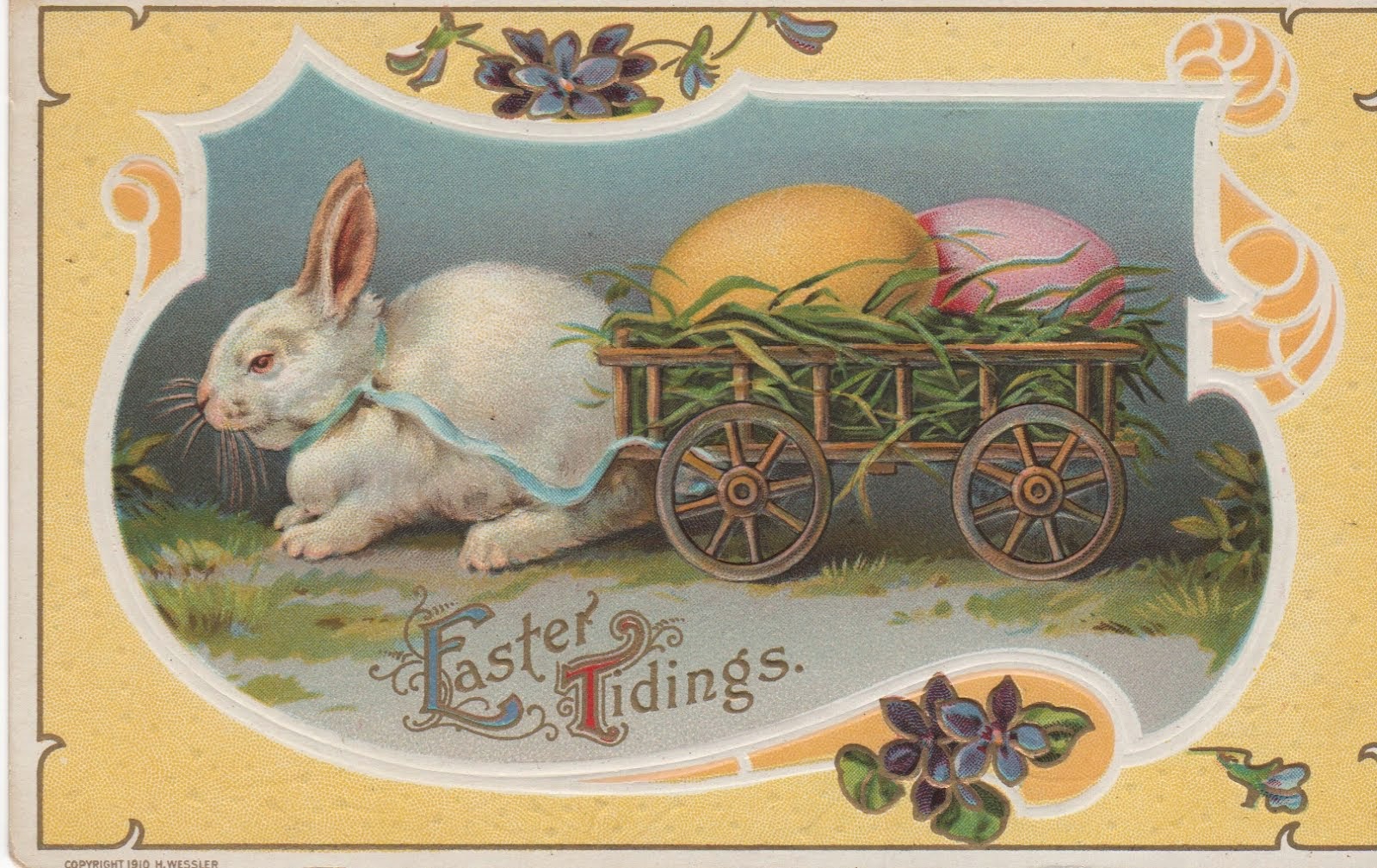
Symbols of Ostara and the Spring Equinox are eggs, rabbits, chicks, flowers and seeds. These symbols became the modern "Easter Bunny" and Easter Eggs (see above link at Easter History and Traditions). Many do not realise that these things symbolising fertility, new life and springtime are of pagan origin. So many don't realise why at Easter time, it was traditional to eat eggs (real ones) in cooking. Eggs were always on the menu for us at this time of year. Boiled eggs with runny, bright yellow/gold yolks, with toast (cut into strips for dipping into the yolk and called Soldiers when we were children) were always a favourite and are still my favourite thing to have Easter morning. Other mornings were scrambled eggs and omelettes. But the tradition of boiled eggs is my childhood memory that I've passed on and we look forward to choosing which cute egg cups to use.


It was also traditional to eat the last of the cured meats that they had stored for use over the winter. This time of year was also seen as a time to cut out some of the heavier foods eaten over winter and was a pre Christian version of the Lenten period. So lighter meals were eaten at this time, with lots of spring vegetables, eggs, lighter meats like chicken and fish, plenty of seeds etc.  


A favourite brunch recipe I have is for : Cheese and Potato Fritters.  I make many variations but the classic basic recipe is my son's favourite. Now I say "Brunch" only because it's a holiday and we like to sleep in on those days. So by the time we are up and about, breakfast has been and gone and it's Brunch.  I also have no set measurements for this recipe as it's something you learn from watching others make it time and time again. Yes I am one of those who cooks with a recipe only as a rough guide and often with no recipe at all, one of those who doesn't measure, gauges things by eye and learnt from an amazing cook who never measured and cooked from the heart not from a book. 


Cheese & Potato Fritters
  1. Peel and then grate 3 large potatoes into a mixing bowl. 
  2. Grate cheese to the same approx quantity and add to the mixing bowl.
  3. Add in some rock salt and grind some black pepper (if you wish). 
  4. Next, add two eggs and a few heaped tablespoons of plain flour to the mix. This is the 'wing it' part.  You may need more egg. You want to bind the mixture but with more of a sloppy consistency.  You don't want it to be dough like. You also don't want too much egg and it be like runny pancake mixture.
  5. You scoop a large tablespoon worth of mixture into a fry pan and have it sizzle when cooking (no sizzle and the pan is not hot enough). Then flip it to cook the other side. They are done when golden on each side (cheese has melted and potato cooked). 
  6. They are basic and easy once you've worked out your consistency. 
  7. Variations: you can add any or all of the following - corn kernels, grated carrot, grated zucchini, diced onion, diced capsicum, diced mushrooms, sliced shallots, etc. However whatever vegetable mix you add, needs an equal amount of grated cheese and more egg & flour.   


*** A cute Easter tip *** If you have some round metal egg rings, and you are fine with them no longer being round, either use a hammer or something with a little force, and you can squish them at one end and turn your round egg rings into 'Egg Shaped' egg rings.

These are PERFECT for cooking the fritters in, for making egg shaped pancakes, egg shaped toast, egg shaped cookies etc. 


The Menu Plan for our 4 day holiday goes something like this: 
  • Cheese & Potato Fritters 
  • Seafood Pasta
  • Fish & Rice dish with cream sauce 
  • Pancakes 
  • Quiche & Salad 
  • Roast Chicken and Vegetables
  • Boiled Eggs and Toast (Soldiers/Strips of toast)
  • Herbed Scrambled Egg
  • Chicken & Sweetcorn Pies
  • Croissants
  • Cooked Ham/bacon/cured meats
  • Hot Cross Buns
  • Spinach, Cheese & Bacon Pies


Celebrating Easter when you are not a Christian means you just don't recognise the aspects relating to Christianity.  However all the fun parts of the season are actually of pagan origin so you still get to take part and recognise all the good things.  Without the non Christians throughout many cultures in history, you wouldn't have Easter eggs, or the Easter Bunny. You wouldn't call it Easter either. 


We love Easter in this house and for us there is another reason that it is special. The day my son was born, was Easter Sunday (in that year). If ever there was a coming together of symbols of the season: fertility, new life, new season of life ... then it was that day for us. I often tell him he was the biggest Easter Egg I ever got and the most painful LOL  All 3.997 kilograms (8 pounds 13 ounces) of him!  He considers Easter his 'second' birthday. The photo below is my boy at 1 year old in his Bunny onesie. 


My son is not a crafty child so we don't do a lot of craft like most people do this time of year. However we decorate the house, have Easter baskets (make new ones or update the old one), have Easter Egg hunts, make our own Easter eggs, watch Easter Bunny type movies and generally enjoy relaxing during this time. 


We always leave out a carrot on a special bunny plate for the Easter Bunny.  The Easter Bunny always leaves a little bit of mess behind too. Usually there is a trail of little eggs through the house with fluff from the Easter Bunny. 


We also like to make Easter treats.  One thing that is a favourite to make are our own chocolates .  We also like to make marshmallows, rice crispy treats and rocky road.


So we are looking forward to the Easter holidays this year. Lots of cooking, lots of fun, lots of family time. Despite being in the Southern Hemisphere where we are embracing Autumn not Spring, it's still a lovely time of year LOL. 

From my family to yours, have a happy Easter and Spring Equinox.